





Let’s be real. A paper gradebook is fine until you leave it at school on the one night you need it. Or until it’s report card time and you’re doing averages on your phone calculator at 10 pm.
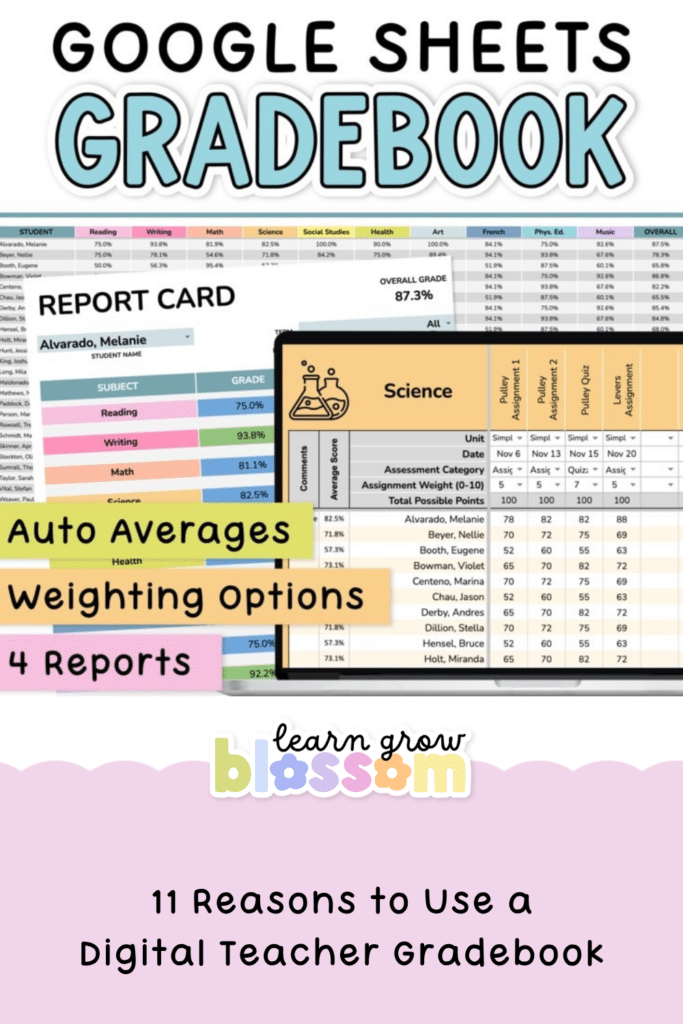
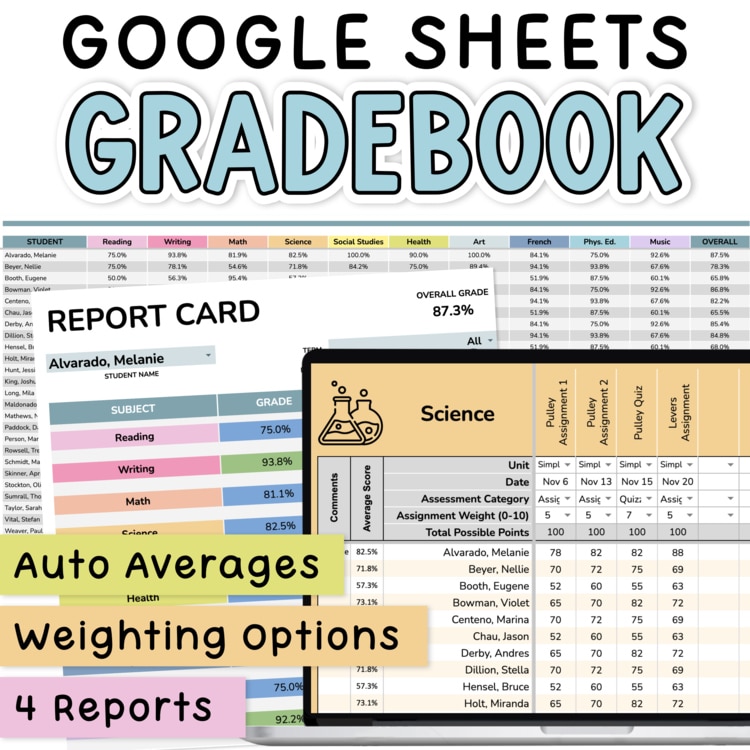
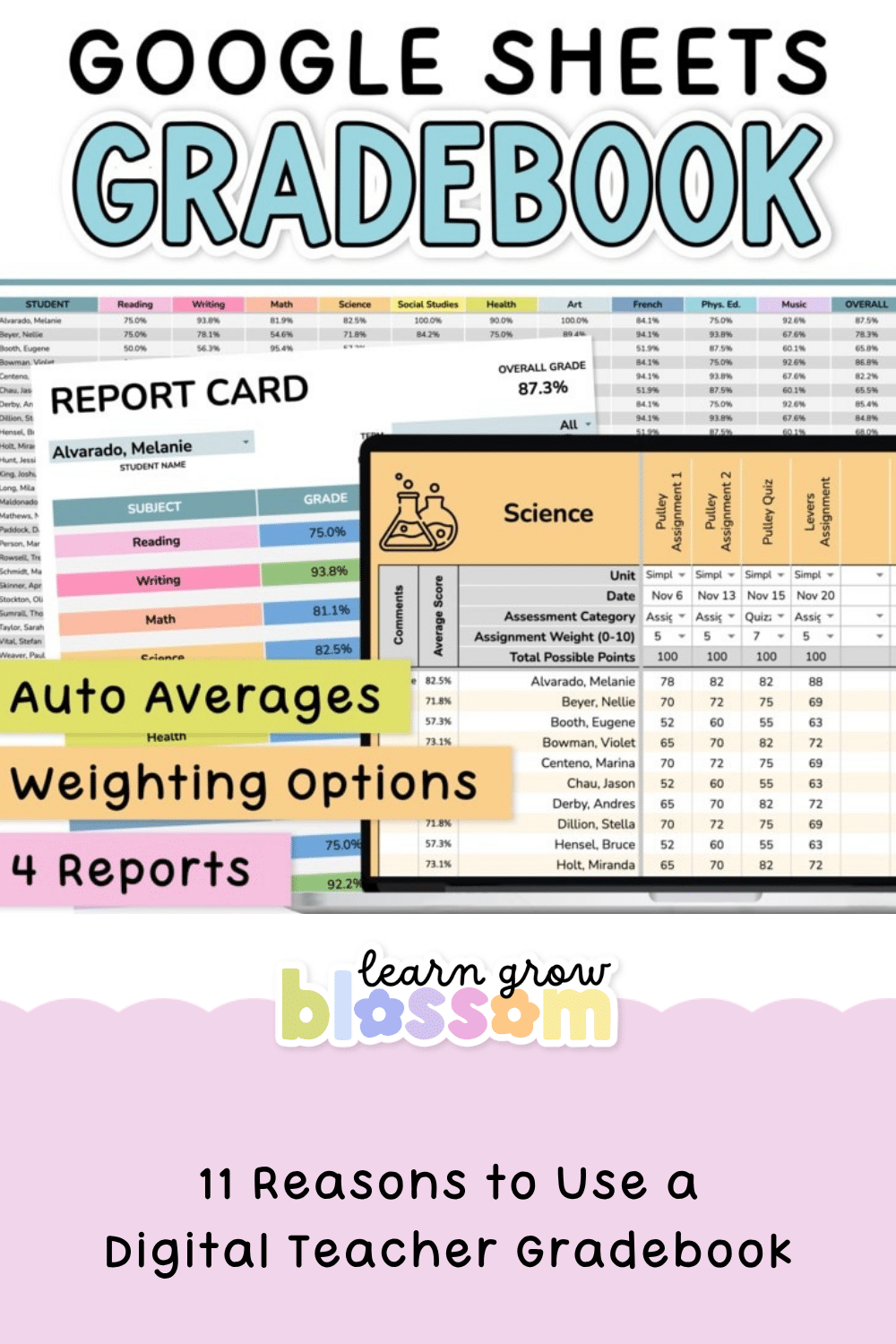
That’s why I made this digital teacher gradebook in Google Sheets. You type your class list once and it fills in everywhere. It averages grades for you, weights assignments and makes student reports. And if you’re a paper person? It prints too.
12 Reasons to Use a Digital Teacher Gradebook
1. You’ll Actually Stay on Top of Grading
When your teacher gradebook lives in one place and does the math for you, entering marks takes a few minutes instead of a whole prep period. Small habit. Big difference by November.
2. Pick Your Look (There Are Six)
When you grab the gradebook, you get all six looks: Original, Composition Rainbow, Fun Boho, Preppy Classics, Preppy Pastels and Preppy Brights. Click the link for the look you want and you’re good to go. Six gradebook looks for the price of one. It’s that good.
3. Your Gradebook Goes Where You Go
No more hauling a binder back and forth. Your digital gradebook is on any device with Google Sheets, so you can enter marks at school, at home or at your kid’s swimming lesson. No judgement.
4. Type Your Class List Once
Enter your students’ names one time and they fill in on every subject sheet. It sounds small. Then you remember writing the same 25 names ten times every September. There are ten subject sheets, and each one has room for 200 assignments. You won’t run out of columns in June.
5. Grade the Way You Want To
Use a 4-point scale, a 5-point scale, fractions or percentages. Percentages for tests and big projects, a 4-point scale for exit tickets and daily work. Your gradebook, your call.
6. Weight Assignments Your Way
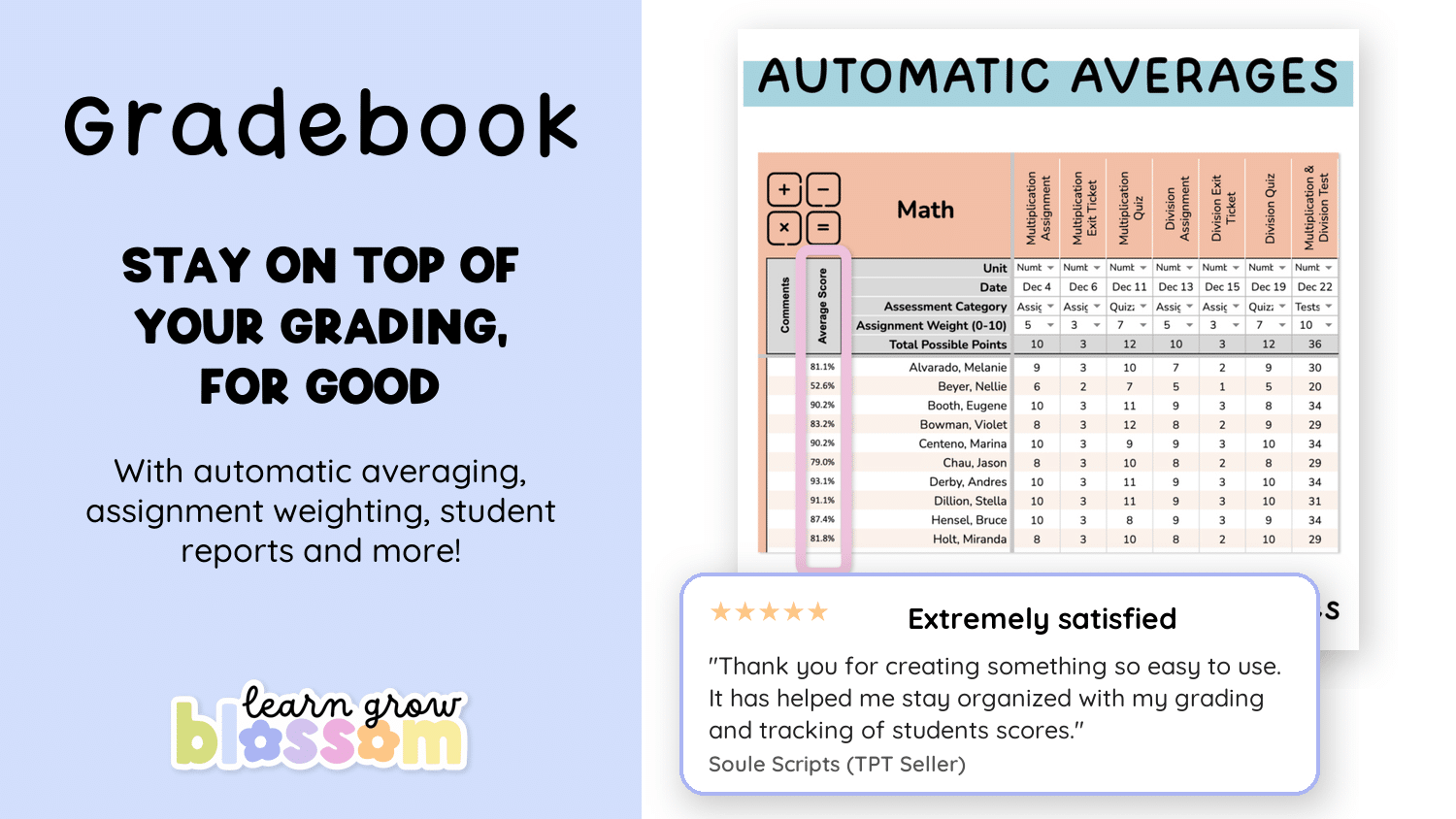
Weight by term, by assignment category or by individual assignments. Don’t want weighting at all? Turn it off.
7. Averages Calculate Themselves
Put the calculator away. Student averages update as you enter grades, and they flow right into the student reports too. Student away for a test, or exempt from an assignment? Type a letter code in that cell and it won’t count against their average.
8. Student Reports in One Click
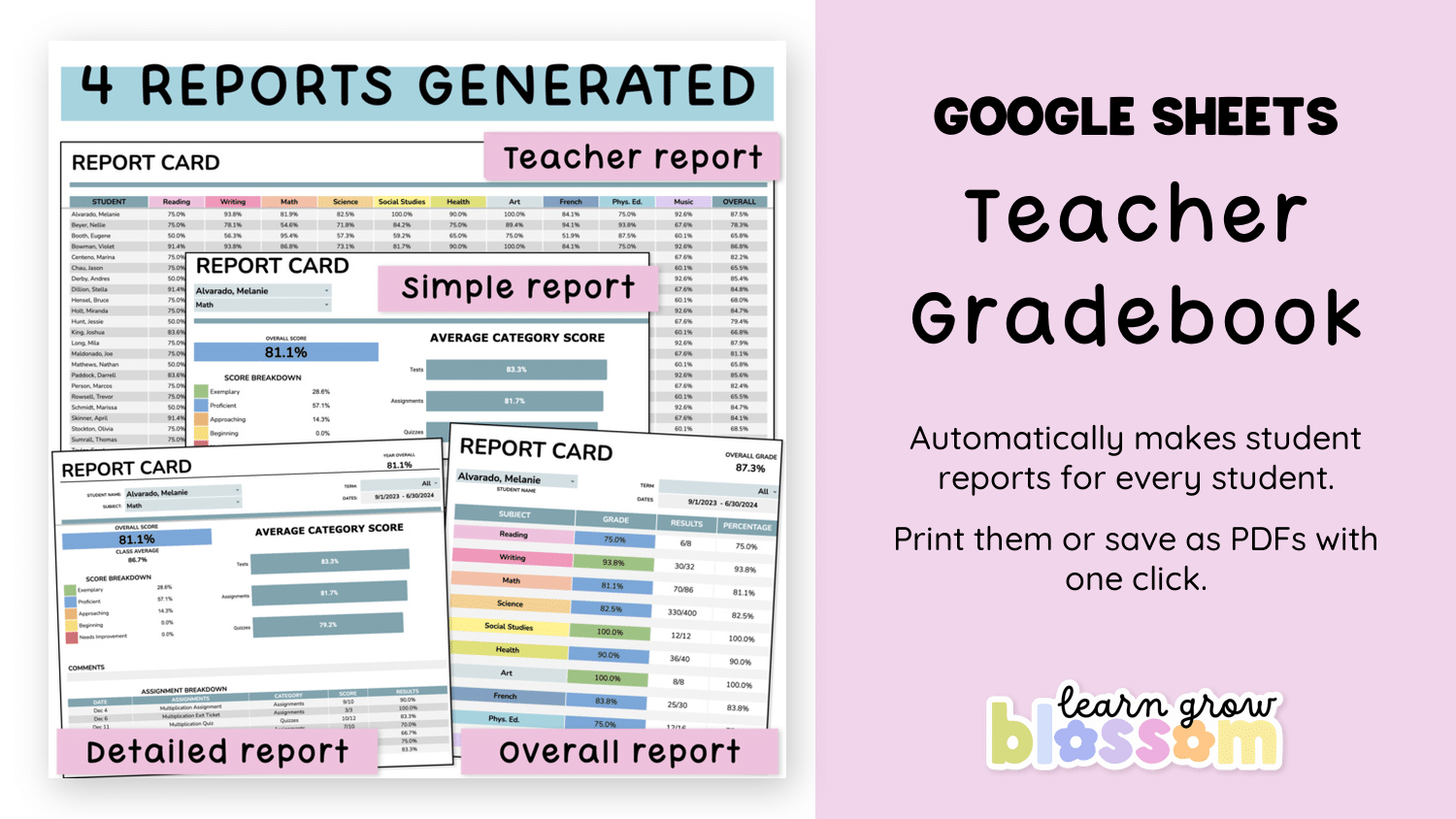
This is the one teachers love most. Four student reports are made for you automatically from the grades you enter. Print them or save them as a PDF to share with admin or a co-teacher.
It makes report card writing so much easier. And when a parent emails about their child’s grades, or you have a meeting coming up, you can pull up that student’s report right then. Share it with your admin or a co-teacher too.
9. Settings That Match Your School
Every school board and district reports differently, so your teacher gradebook template has to bend. Choose how grades show on student reports (letters, percentages, descriptors, 4-point or 5-point scale) and set your own grading scale, like which percentage equals which letter grade.
10. It’s Printable
I know some of you are paper people. No problem. Print the gradebook sheets and the student reports any time. You get all the digital perks and still have a copy in your teacher binder for report card season.
11. Your Data Is Right There
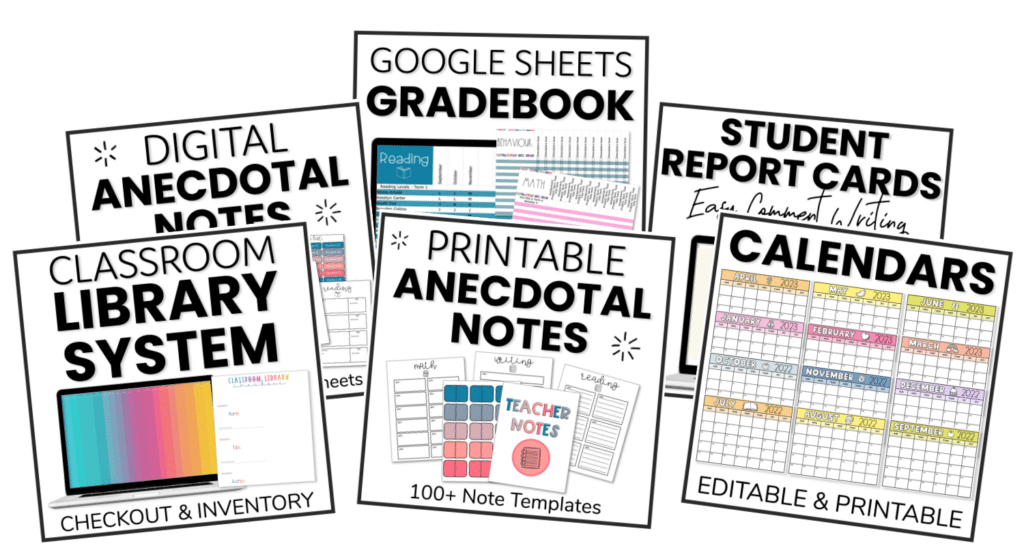
Parent meeting? Admin check-in? Report card comments? Having grades at your fingertips makes all of it easier. If you’re also tracking observations, pair it with my anecdotal notes post and you’ll have the whole picture for every student.
12. Tutorial Videos Walk You Through It
There’s a lot packed in here, so there are tutorial videos to get you set up and feeling confident. Watch the teacher gradebook tutorial videos here.
Ready to Try the Teacher Gradebook?
So that’s the deal, teacher friend. With a digital teacher gradebook, grading stops piling up. No more scrambling for an average when a parent asks how their child is doing. One click and you have the answer.
One gradebook, six looks, and every feature above. Pick the look you love and start entering marks.
Grab the Google Sheets teacher gradebook here








One Response